
Trouble with wasps?
We treat the nest.
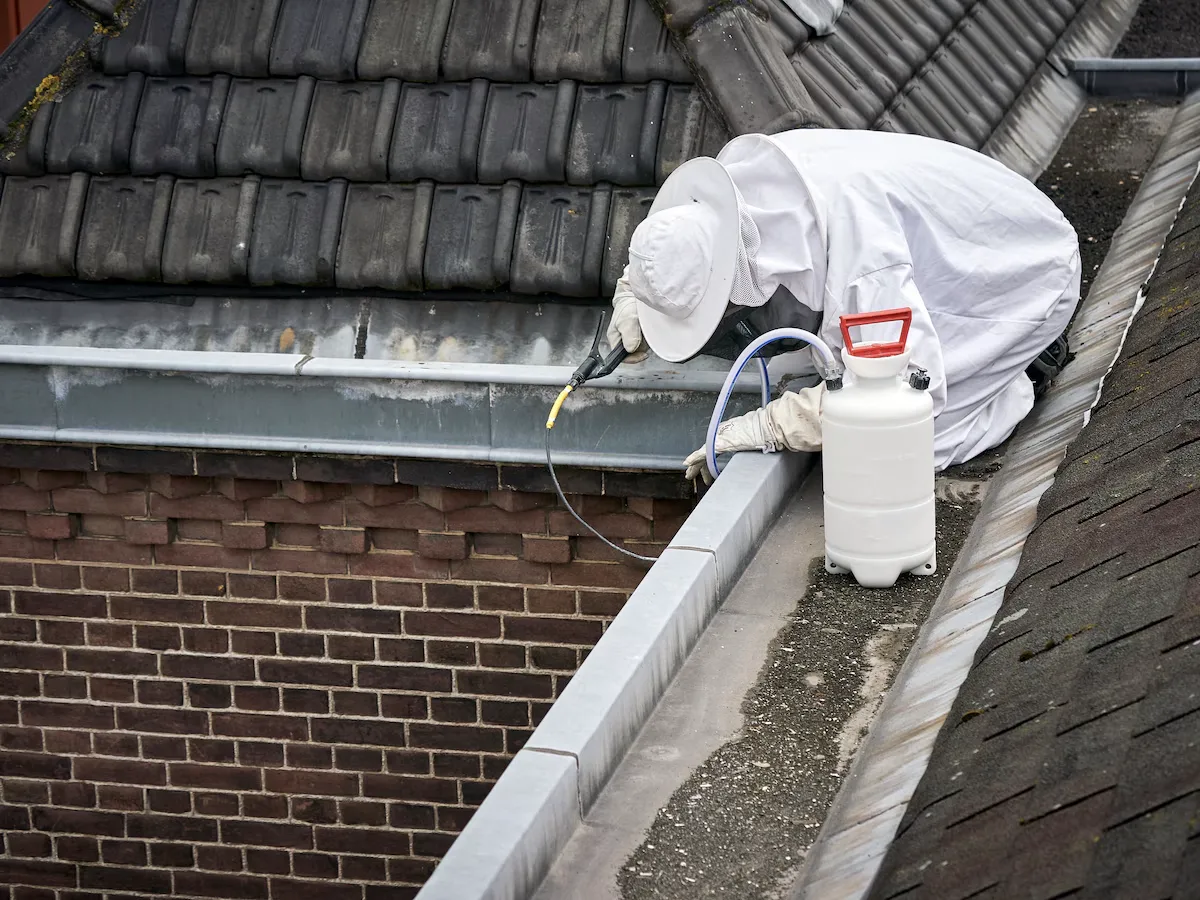
Eversor treats wasp nests in and around your home with experienced technicians. You receive the total price beforehand and a seasonal guarantee for the same nest. If that nest remains active, Eversor is your point of contact for follow-up.
Wasp control
Need your wasp nest treated? Contact Eversor.
Wasps near your patio, roof edge or inside your home can cause problems. We establish where the nest is and how it can be treated. You do not need to search for or open the nest yourself.
Professional nest treatment
In a cavity wall, near the roof or in the garden: we assess the nesting site and carry out a suitable treatment.
A clear price beforehand
You know what you will pay before treatment. We discuss the cost of any additional work first.
Guarantee for the same nest
The guarantee applies during the wasp season. Does the treated nest remain active? Contact us for follow-up.
What do we agree with you in advance?
Assessing the nest and access
Tell us the entry point, height and how the area is used. We assess whether treatment is needed and how to reach the nest safely. At a patio, we also discuss visitors’ walking routes and the timing of treatment.
Treating the active nest
We treat the confirmed nest or accessible entry point using a suitable professional method. Physical removal is different from control: a hidden nest does not always need to be exposed or removed. We explain what we will do beforehand.
Monitoring activity and aftercare
Wasps returning to the nest may still be visible after treatment. Keep your distance and do not seal the opening immediately. You receive aftercare instructions and a contact route for persistent activity. Our seasonal guarantee applies to the same treated nest.
Wasp control is available from €89.95, with a seasonal guarantee for the same treated nest. Multiple nests, unusual height or difficult access may require additional work. We confirm the price and scope before treatment; a new nest is a separate enquiry.
Our approach
How we treat your wasp nest
From your first enquiry to checks after treatment, this is what you can expect.
Do not treat an active wasp nest yourself.
Attempting to treat or remove it yourself can be dangerous: disturbed wasps defend their nest and may sting repeatedly. Keep your distance, keep children and pets away and leave control to a professional. Do not open the nest or block its entrance.[1]
Discussing your situation
Call us or request contact through the form. Tell us where wasps enter and whether they also come indoors. An overview photo helps with the initial assessment.
Checking the nesting site
We check the species, activity and access to the nest. A cavity-wall nest needs a different assessment from a freely hanging nest in a shed.
Agreeing the approach and total price
You know what we will do and the total cost beforehand. We discuss any extra work or specialist access before treatment.
Treating the nest
We treat the nest and explain when you can use the area again. We tell you what activity may still occur and when to call us.
Checks and seasonal guarantee
Does activity remain at the treated nest? Let us know. We assess whether a check or additional treatment is needed. Below, we explain the seasonal guarantee.
Nest locations
The nesting site determines what is possible
Wasps may nest in sheltered wall cavities, beneath roofs, in sheds or underground.[1] Access determines which approach we can carry out.
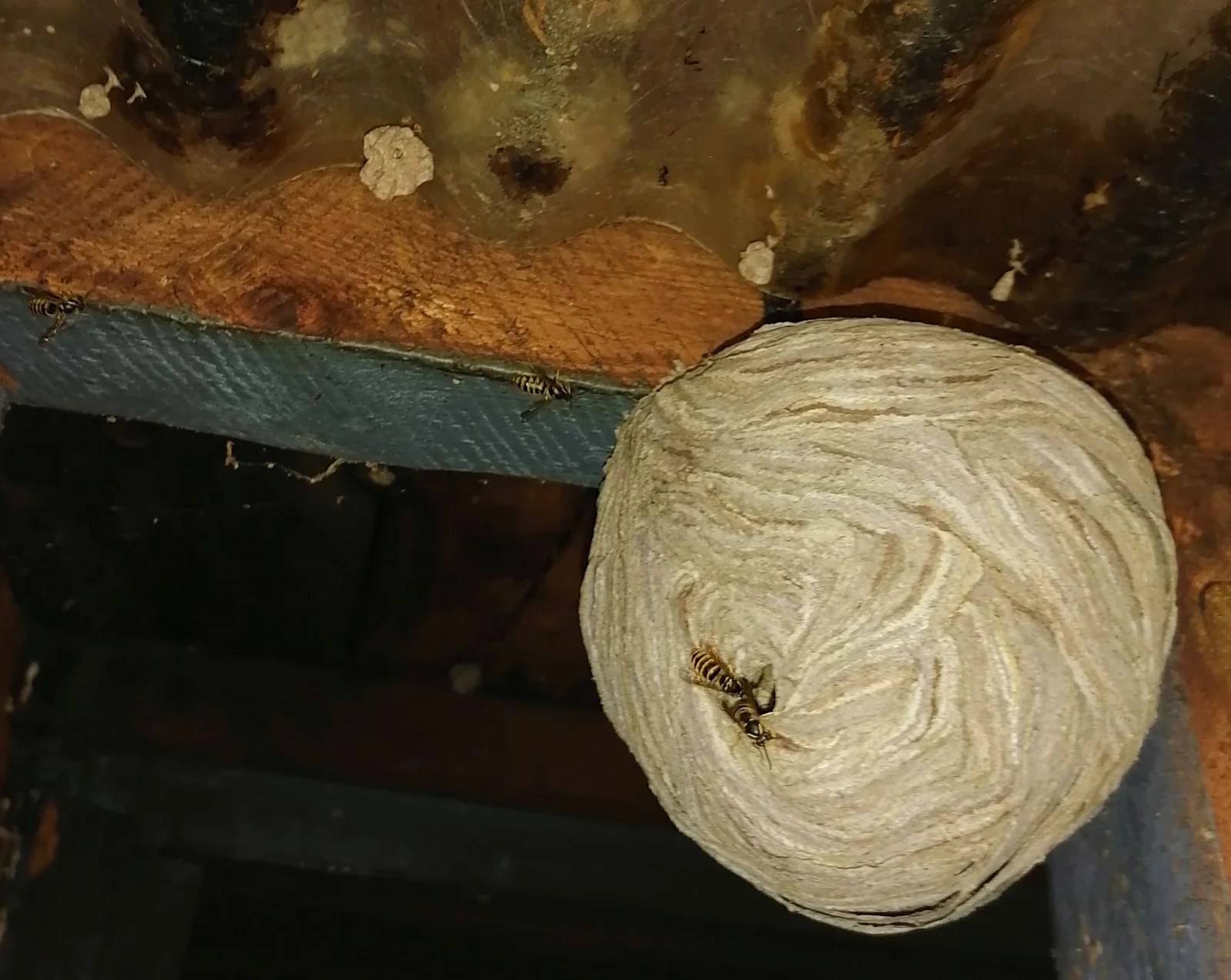
Under a shed roof[8]
A visible nest beneath the roof or between beams. Its location and accessibility determine how we can treat it.
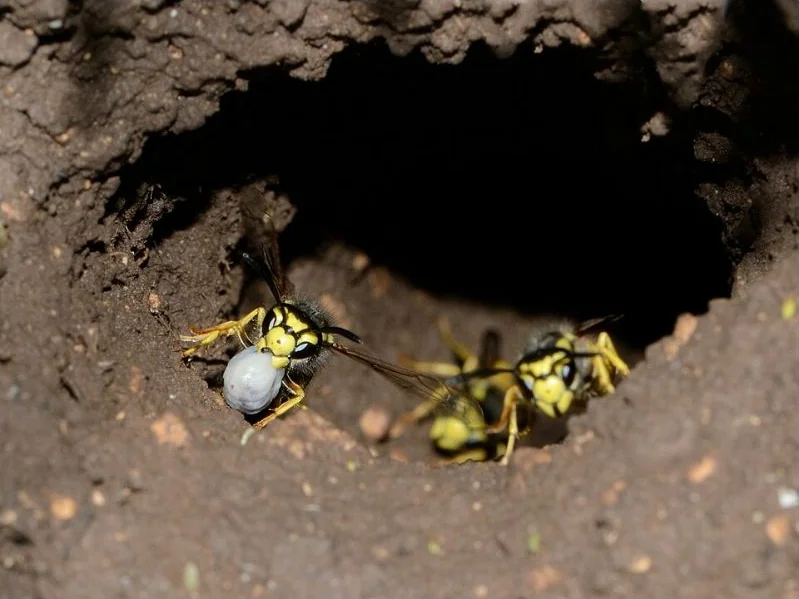
Underground[9]
Often, only the opening and wasps flying in and out are visible. The nest itself is beneath the ground.
In a cavity wall or behind an external wall
The nest does not have to be visible. Its entrance may provide access for treatment. Do not seal the opening or break open the wall; have the route and access assessed first.
At a roof edge or beneath roof tiles
Tell us which side of the building the wasps use and at what height. A photo of the whole wall helps assess access, ground conditions and obstacles. Not every location can be safely reached with a ladder.
In a shed or nest box
Leave the area undisturbed and do not open boxes or panelling to search for the nest. For a freely hanging nest, we also assess whether physical removal is worthwhile and safe.
Underground or beneath a patio
Stay out of the flight path and keep children and pets away from the opening. Do not dig or cover the hole. For an underground nest too, the species and access need to be established first.
Treatment is not the same as removal.
Treatment targets the active wasp colony. The nest material does not always need to be removed. We separately agree whether physical removal is necessary and practical, especially behind a wall or roof.
Any insecticide application must be authorised and comply with the legally prescribed conditions of use.[4]
Costs and guarantee
Wasp control from €89.95
See how the price for your wasp nest is determined → (in Dutch)
What determines the price?
You receive a total price before treatment. It depends on the nesting site, access and work needed. Tell us the approximate height and send an overview photo where possible. This helps us discuss the options and price for your situation.
Seasonal guarantee for the same nest
The guarantee applies to the same nest during the current wasp season. If that nest remains active, call us with the treatment address, treatment date and what you now see. We assess your enquiry and agree the necessary follow-up. A new nest elsewhere is not covered. We discuss arrangements for checks and any additional treatment beforehand.
Other stinging insects
Hornets, honey bees or bumblebees?
You can contact us if you are unsure too. We check which insect is causing the problem and discuss what is needed.
European hornet
A wasp species with reddish-brown areas on the head and thorax and a mostly yellow abdomen with dark markings. A nest near a doorway or another busy area may require treatment.[10]
Help with hornetsAsian hornet
Also called the yellow-legged hornet. Look for a black thorax, a broad orange-yellow band on the abdomen and yellow leg tips together. Report a suspected sighting with a clear photo through Waarneming.nl.[3]
Dutch reporting route and local helpHoney bees and bumblebees need a different approach. A honey-bee swarm can often be collected by a beekeeper. Bumblebees are hairy pollinators; a nest can usually stay in place if it does not create a hazard.[2]
Compare the differences in photos (in Dutch)Practical arrangements
What your proposal specifies
The nesting site and access, treatment of the agreed nest, price and any surcharges are established beforehand. Physically removing a nest is not the same as treating it and is not automatically included at every location. The seasonal guarantee applies to the treated nest under the nationwide service conditions.
Also serving Rotterdam and the surrounding area
Eversor helps with wasps in Rotterdam. Our local page explains preparation, aftercare and help at your address, including surrounding towns.
Frequently asked questions
Your questions about wasp control
Can a hidden nest in a cavity wall be treated?
Yes, treatment is often possible through the entrance the wasps use. We first assess whether the species, route and access are sufficiently clear. The nest does not always have to be removed from the wall.
What should I do if wasps come indoors?
Keep your distance and keep children and pets out of the room. Close the door to other rooms if you can do so safely. Do not block an active nest entrance outside: wasps may find another route indoors. Call us if they repeatedly enter.
Why do I still see wasps after treatment?
Wasps that were away during treatment may still return. Follow the instructions you received and stay out of the flight path. Call us if activity does not decrease as discussed, increases again or wasps enter indoors. Tell us which opening they use and when the nest was treated. We then assess whether a check or additional treatment is needed.
When can I seal the opening?
Only seal the opening after the technician confirms that it is appropriate. One quiet moment does not prove the nest is inactive. Never block an active entrance: wasps may find another route, including indoors. Necessary ventilation must be maintained in cavity walls and roofs.
How should I prepare if children or pets are present?
Keep children and pets away from the nest and tell us beforehand where they play or stay. Only clear access if this does not require passing the nest. They must stay away from the work area during treatment. The technician explains when it can safely be used again.
Does an old wasp nest need treatment?
No. An abandoned nest without an active wasp colony does not need control. Common and German wasps start new nests in spring; the old nest is not reused. The same sheltered location may remain attractive. If unsure, have the activity assessed: the month or one quiet moment does not provide certainty.
Can I request help if I cannot find the nest?
Yes. Tell us where wasps keep returning and which opening they enter, if visible from a safe place. We assess the suspected nesting site. A single wasp searching for food does not necessarily come from a nest at your home.
Background on nesting behaviour and safety: KAD.[1] Call 112 if you have difficulty breathing, swelling of the tongue or throat, or faint after a sting.[5]
Contact
Have your wasp nest treated
Request contact through the form. We call you to discuss the nesting site and options. Prefer to discuss it directly? Call us.
085 226 11 11You can email a photo to info@eversor.nl. Only take photos from a safe place; use zoom and stay out of the flight path.
Your enquiry
Mention the nesting site, approximate height and whether wasps also enter indoors. You agree the approach and total price before treatment.
Sources and photo credits
- KAD — Common wasp: identification, nesting sites, season and entrances.
- KAD — Honey bee and Bumblebees.
- NVWA — Yellow-legged hornet (Asian hornet): comparison with European hornets and the current Dutch reporting route.
- Ctgb — Authorisation and use.
- Thuisarts — Insect stings.
- Header photo: existing Eversor image collection, used as an illustration of the service.
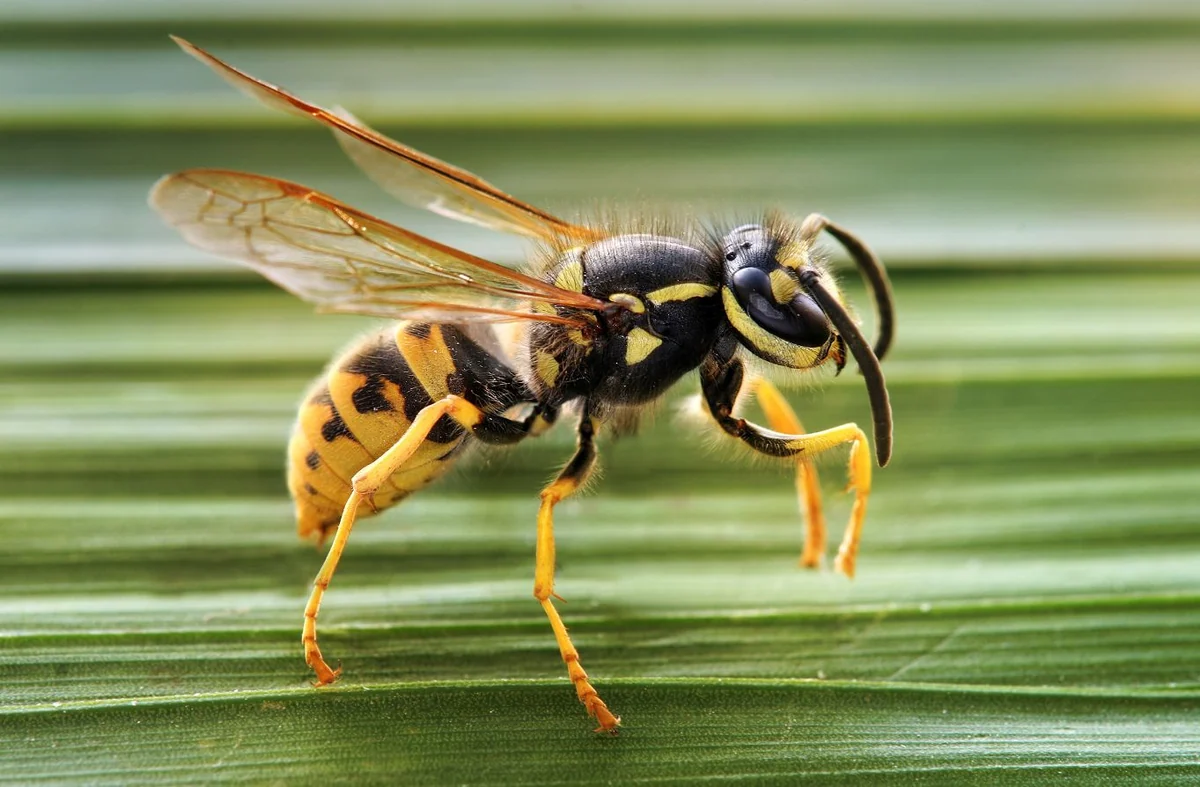
- German-wasp photo: Richard Bartz, Wikimedia Commons, CC BY-SA 2.5. Reproduced for the web, lightly cropped at the image edge, reduced and converted to WebP; the insect is unchanged. The same licence applies.
- Photo of a nest beneath a shed roof: Wilhelm Zimmerling PAR, Wikimedia Commons, CC BY-SA 4.0. Reduced and converted to WebP; full photo retained. The same licence applies.
- Photo of wasps at an underground nest: Gideon Pisanty (Gidip), Wikimedia Commons, CC BY 3.0. Reproduced for the web, reduced and converted to WebP; insects and nest entrance unchanged.
- KAD — European hornet: appearance and assessment of nuisance.
Source content checked on 18 September 2026. Photos 7–9 are licensed source images.