
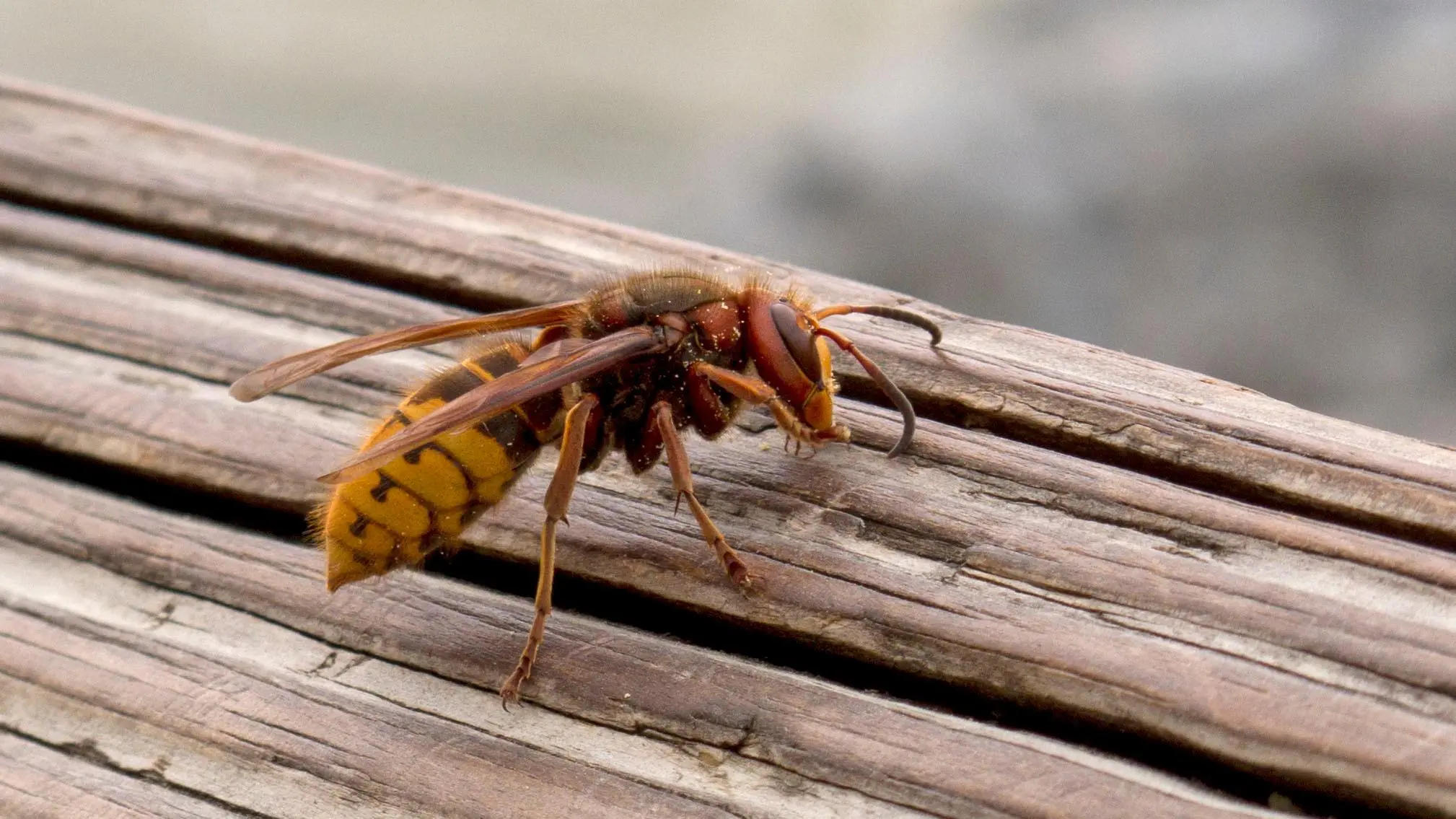
European and yellow-legged hornets
Hornet nest near your home? Get it assessed safely
A hornet nest near a doorway, roof or play area? Eversor identifies the species, assesses the nest location and discusses a safe response. We can arrange prompt help where treatment is needed.
Direct contact with Eversor · Nationwide help · Clear plan
Lees in het NederlandsIdentify
How can you identify a hornet and its nest?
One large wasp in a garden does not prove there is a nest on your property. European and yellow-legged hornets differ in appearance and follow-up. Keep away from a suspected nest and photograph it only from a safe distance.
Repeated flight path
Several insects repeatedly enter the same roof gap, tree canopy or opening.
Nest close to people
A nest beside a door, window, terrace or play area calls for a prompt assessment.
Uncertain identification
Colour and markings are difficult to judge at a distance. A clear photograph can help.
Species and sources
European or yellow-legged hornet?
European hornet
A large native wasp with extensive yellow and reddish-brown markings. Treatment is not always needed; location and nuisance matter.
Yellow-legged hornet
Also called the Asian hornet. Its dark body and yellow leg ends are useful clues. Follow NVWA guidance to report a suspected nest through waarneming.nl.
Other wasps and lookalikes
Common wasps and harmless hoverflies can be confused with hornets. Identification prevents inappropriate action.
What to do now
Get clarity on your situation
Stay away from the nest entrance. Keep children and pets out of the flight path; do not block the opening. Take a photo only if safe. Report a suspected yellow-legged hornet through the official route.
Eversor
How Eversor helps
We start with the species and where the activity begins. Then we explain our work and the practical steps you can take.
Identify species and site
We review photos, flight routes and accessibility. A concealed or high nest needs different equipment.
Assess the risk
We consider entrances, paths, children, access and whether leaving the nest alone is reasonable.
Treat safely when needed
We agree on method, access and price before work. We explain what to expect afterwards.
Cost
Know the work and price beforehand
Price depends on the species, nest height, access and equipment required. A visible low nest differs from a concealed nest beneath a roof. A photo and location help us assess the work; we explain the price before treatment.
FAQs
Frequently asked questions about european and yellow-legged hornets
Is every hornet dangerous?
A single hornet is not automatically dangerous. Disturbing a nest, especially close to a doorway or seating area, increases the risk. Keep your distance.
Can I seal the nest myself?
No. Do not block an active entrance, work at height or approach the nest closely.
What if I suspect a yellow-legged hornet?
Take a photograph from a safe distance and report the insect or nest through waarneming.nl following NVWA instructions.
Does every nest need treatment?
No. Species, location and the extent of nuisance determine whether intervention is appropriate. We assess the nest first.
Eversor
Request help
Tell us where you found the animal or signs. You can send a photo by email; we will discuss the right next step.
Describe your finding
Tell us where you found the animal or signs. You can send a photo by email; we will discuss the right next step.