
Silverfish and long-tailed silverfish control
Silverfish or long-tailed silverfish indoors? Eversor identifies the species, investigates hiding places and tackles the activity in a targeted way. You deal directly with us about treatment, the price and follow-up.
Identification
Which species are you seeing indoors?
Both species are wingless, with two antennae and three tail filaments. The distinction matters: common silverfish are more dependent on moisture; long-tailed silverfish can also cause problems in drier rooms. The room where you find them does not prove the species.
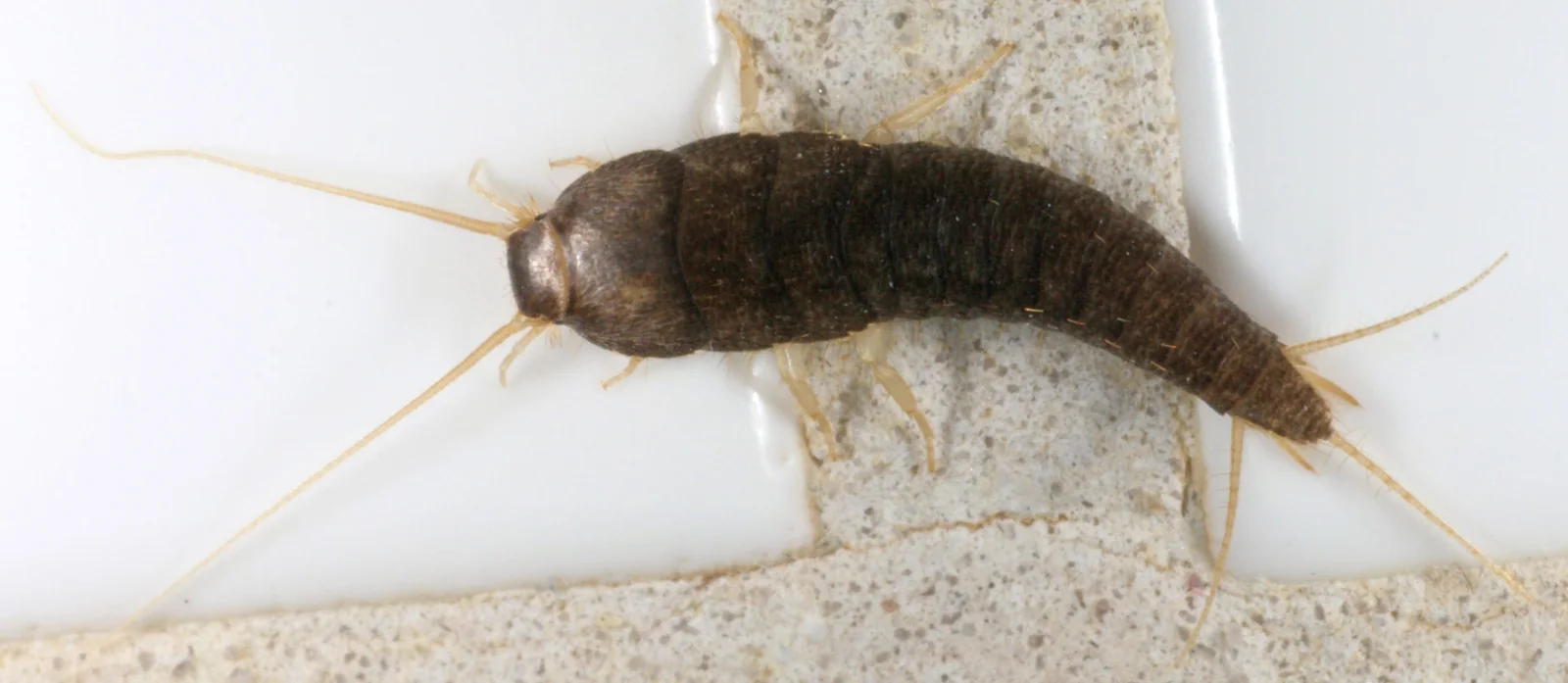
Common silverfish
A relatively smooth-looking, scaled body and comparatively short tail filaments. The colour can look dark in a photo.
[7]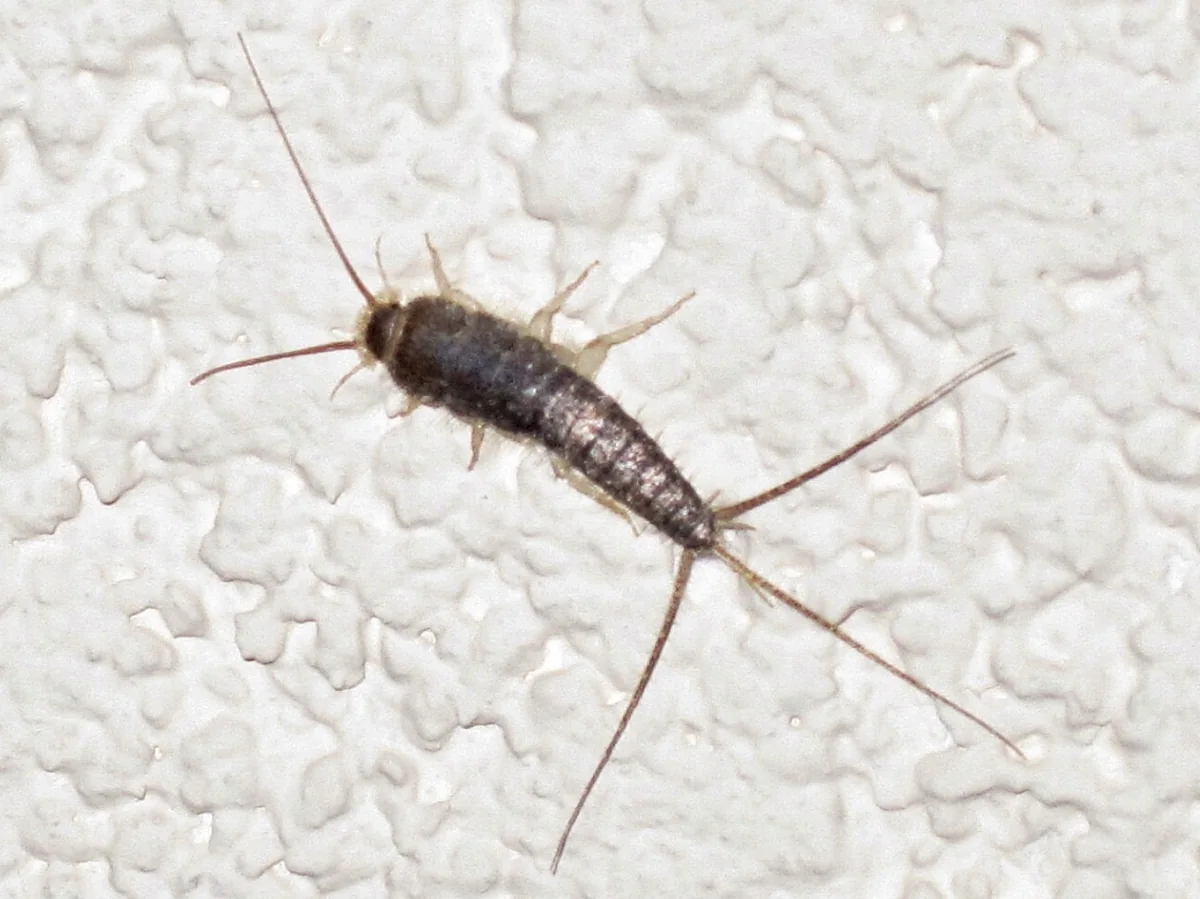
Long-tailed silverfish
Noticeably long tail filaments and antennae. Fine hairs cannot always be assessed from an ordinary overview photo.
[8]Original source photos, not displayed at the same scale. View the original identification photos in the detailed comparison below.
When is professional help worthwhile?
Do you keep finding insects, see them in several rooms or notice new damage to paper or books? Have the species and spread assessed. This also applies if previous measures have not helped enough. One insect, even seen during the day, does not by itself prove a serious infestation.
View the detailed comparison: common or long-tailed silverfish? (in Dutch)
The photos have different magnifications. Compare body features and conditions; image size does not indicate actual body length.
What do we agree with you in advance?
Identifying common or long-tailed silverfish
We assess the insects and locations, moisture, storage and spread across rooms. A single finding is not automatically an infestation. Where paper damage or repeated activity occurs, we investigate whether long-tailed silverfish or another species are involved.
Addressing conditions and hiding places
For common silverfish, reducing moisture and improving ventilation are often important. For long-tailed silverfish, we assess gaps, storage and spread; where needed, we combine suitable control with monitoring. Dehumidifying a bathroom alone does not treat every long-tailed silverfish infestation.
Monitoring activity
We agree where to record sightings or monitor activity and when to review the outcome. New findings are assessed room by room. You receive preparation and aftercare instructions suited to the chosen measures.
The species, spread and measures required determine whether treatment is worthwhile and what it costs. A pest-control visit is not automatically needed for one silverfish. For a treatment programme, you see which monitoring and checks are included.
Control
How we tackle the activity
You receive a proposal for your situation beforehand. For common silverfish, addressing moisture and hiding places may be sufficient. For long-tailed silverfish, we focus on the spread and whether treatment is needed.
Establishing the species and extent
We discuss your sightings and investigate the affected rooms. Show us previous catches and photos too. This helps establish where measures are needed.
Agreeing the approach and price
We explain the proposed measures, what to prepare and the costs. We only carry out the agreed work after you accept.
Carrying out control
We carry out the agreed control in the affected rooms. If an insecticide is needed, we apply it in a targeted way to agreed, suitable locations. We agree beforehand which hiding places need to be accessible and how treatment will be carried out. You receive appropriate instructions for residents, pets and cleaning; the product’s conditions of use govern the application.
Checking and adapting
You receive a report and follow-up arrangements. Keep recording sightings. Depending on how activity develops, we assess whether further measures or a follow-up visit are needed.
Several floors or an apartment?
Report all locations, including beyond the room where the problem started. For long-tailed silverfish, connections between rooms and homes may matter. We discuss any coordination needed with the landlord or owners’ association.
Preparation and aftercare
What can you do before and after a visit?
Before the visit
- Record where and when you find insects in each room.
- Keep a clear photo or an undamaged specimen in a sealed container.
- Tell us which sprays, traps or other products you have already used.
- Ask which skirting boards, cupboards or other areas need to be accessible. Do not move belongings throughout the home without discussing it with us.
Prevention: choose measures for the species
- Common silverfish: have leaks repaired and reduce condensation. Improve ventilation where moisture builds up, including behind cupboards or beneath the kitchen sink.
- Long-tailed silverfish: check boxes and stored paper, reduce cardboard storage and protect vulnerable documents in securely closed containers. Ventilation alone is not enough.
- Both species: remove crumbs and dust along accessible edges. Coordinate sealing seams and gaps with the treatment plan.
- After treatment: follow the agreed cleaning instructions. Do not clean treated areas on your own initiative.
More about living conditions and prevention: common silverfish [1] and long-tailed silverfish [2].
Clear arrangements
What determines the cost?
The species, number of affected rooms, access to hiding places and work needed determine the price. Any follow-up also makes a difference.
We agree the scope and costs before work begins. Ask what is included and which follow-up work is charged separately. Submitting a form does not yet book a visit.
Practical arrangements
Example situation: a bathroom or a dry bookcase
A single common silverfish in a damp bathroom first calls for attention to moisture and ventilation. Recurring insects in a dry bookcase, several rooms or paper damage call for assessment of the species and spread. Monitoring and moisture measures are followed room by room before additional control is chosen.
Also serving Rotterdam and the surrounding area
Eversor helps with silverfish in Rotterdam. Our local page explains preparation, aftercare and help at your address, including surrounding towns.
Frequently asked questions
What is the difference between common and long-tailed silverfish?
Common silverfish usually look smoother and have comparatively short tail filaments; long-tailed silverfish have longer tail filaments and more hairs. Common silverfish are more dependent on moisture, while long-tailed silverfish can also inhabit drier, heated rooms and damage paper. Colour, size or location alone does not provide certainty: compare several features or have a specimen assessed.
Are glue traps enough to control long-tailed silverfish?
Glue traps help track activity and locations and catch some insects. They do not reach every hiding place and are generally not a complete solution on their own. Record the position, catch and checking date; an empty trap does not prove that the home is clear. Supporting evidence [3].
Should I arrange treatment immediately after finding one silverfish?
No. A single sighting does not prove a serious infestation. Record the finding and check for further activity or damage. Contact us for persistent problems, uncertain identification or vulnerable belongings.
Why does ventilation not always help?
Ventilation can reduce moisture and is particularly relevant to common silverfish. Long-tailed silverfish can also live in drier rooms. The species, hiding places and spread then need to be considered.
How many treatments are needed?
That depends on the species, spread and chosen approach. New sightings or catches after treatment are a reason to assess progress; they do not automatically mean the entire approach has failed. During a follow-up check, we assess activity room by room and any remaining hiding places. We agree beforehand when to report back and when a check or further treatment is needed.
Do we and our pets need to leave the home?
That depends on the treatment. Tell us about children, pets and aquariums beforehand. You receive instructions specific to your home; do not assume a general waiting period.
Do skin symptoms mean these insects are responsible?
Skin symptoms do not identify an insect species. Use an insect or photo for identification. Have persistent skin symptoms assessed separately; we do not provide a medical diagnosis.
Contact
Have the activity addressed
Tell us where you see the insects, how often you find them and what you have already tried.
085 226 11 11Would you like to share a photo? Email info@eversor.nl.
Your enquiry
For common and long-tailed silverfish. In the comments, mention the species you suspect and where you find them. We contact you about the approach and costs; a visit has not yet been scheduled.
Sources and photo credits
- KAD — Common silverfish: identification, living conditions and proofing.
- KAD — Long-tailed silverfish: spread, damage and control.
- NIPH — Long-tailed silverfish: biology and control, 2019, pp. 11–12, 18–19, 23–26 and 39–40: identification, body measurements, spread and monitoring.
- Animal Diversity Web — Lepisma saccharina: body features, behaviour and food.
- KAD — Firebrat: confusion with a related species.
- Ctgb — Authorisation and use: conditions for insecticide applications.
- Common-silverfish photo: Magne Flåten, Lepisma saccharinum MF, CC BY-SA 3.0. Original source photo used; display and magnification differ between cards.
- Long-tailed silverfish photo: Bj.schoenmakers, long-tailed silverfish in Mook, CC0. Original source photo used; display and magnification differ between cards. The images do not show an Eversor client visit.
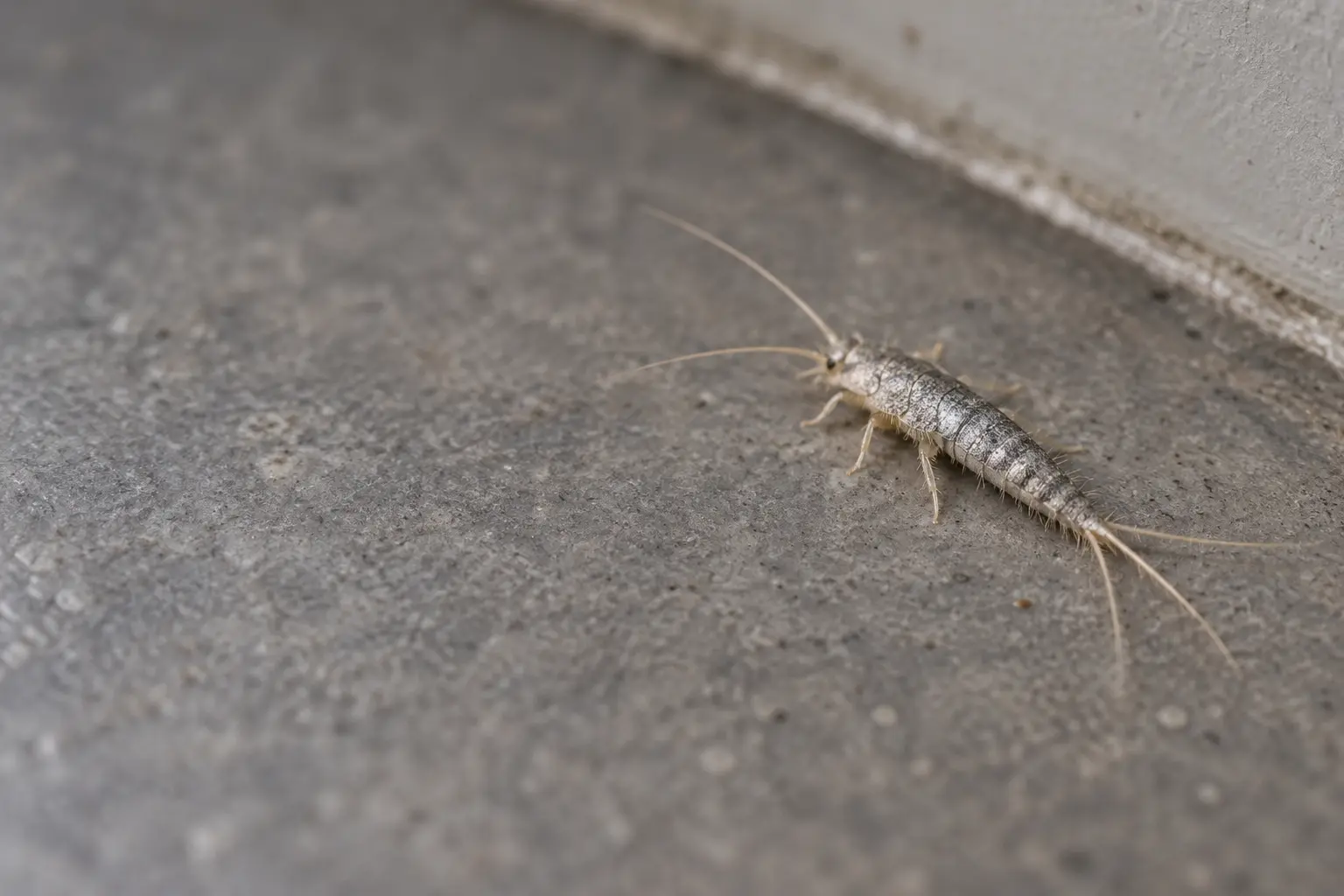
Hero: an AI-generated illustrative image, not an identification photograph or client visit.